How businesses across sectors put portable laser engraving to work.
Etsy sellers, Amazon handmade vendors, and Shopify stores use LaserPecker machines to produce personalized items on demand. No inventory risk. Each order gets engraved after payment, packed, and shipped the same day.
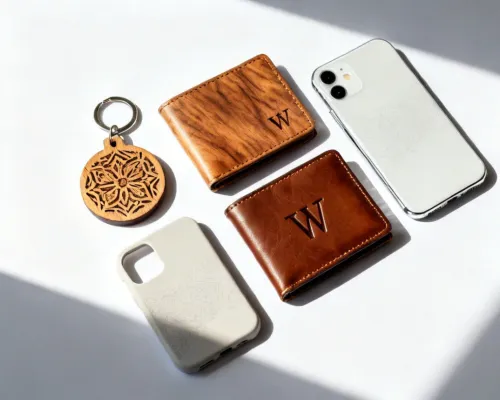
Common products: engraved tumblers, custom jewelry, pet tags, wooden signs, leather accessories, phone cases. The LP2 handles items under 100mm x 100mm at speeds that keep up with 30+ daily orders. The LP5 expands the work area and adds metal capability for mixed-material catalogs.
Case: Sarah Mitchell, owner of WildPaw Engravings (Portland, OR), switched from outsourced engraving to an LP5 in January 2025. Her Etsy shop processes 40-60 custom pet tags per week. Average engraving time per tag: 4 minutes. She reports a 62% margin improvement versus outsourcing, based on her Q1 2025 revenue of $18,400 against $2,100 in material and electricity costs.
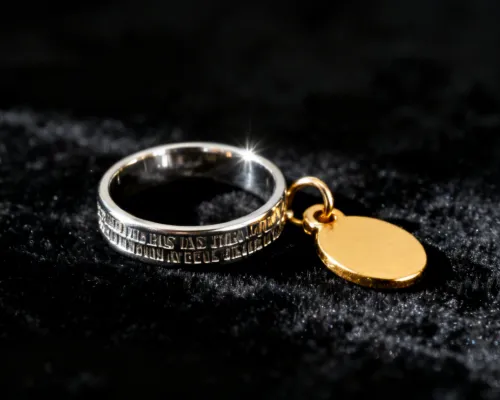
Jewelers use the LP4's 2W IR fiber laser to mark directly on gold, silver, platinum, titanium, and stainless steel without surface coatings. The 0.01mm resolution handles text as small as 1mm height, fine enough for the inside of ring bands and the back of pendants.
Unlike rotary engravers, the laser produces no mechanical stress on thin or delicate pieces. No clamping marks. No vibration damage on stones. The enclosed design contains the beam for safe operation in retail settings.
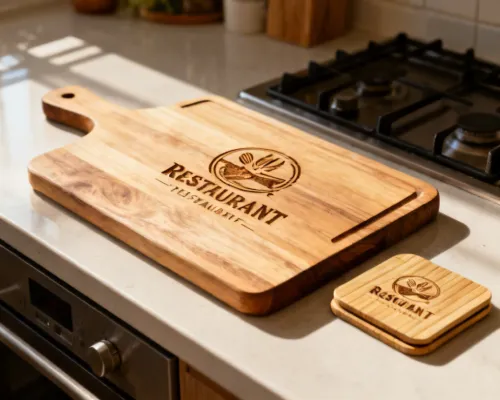
Restaurants, breweries, and coffee shops use LaserPecker to brand their environment. Engraved menu boards, coasters, bottle openers, tap handles, and serving trays. Every piece carries the brand without the cost of custom manufacturing.
The LP2 and LP5 work directly on food-safe materials: untreated wood, bamboo, and cork. For branded drinkware, the rotary attachment handles cylindrical objects up to 100mm diameter. One craft brewery engraved 200 branded coasters in a single shift using batch mode in the app.
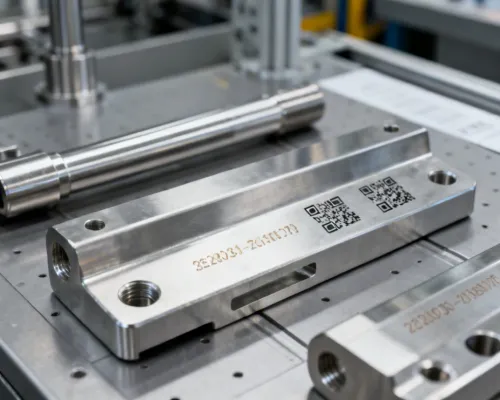
Machine shops, electronics assemblers, and medical device manufacturers use LaserPecker's IR modules for permanent part identification. Serial numbers, date codes, lot numbers, and machine-readable barcodes that survive chemical cleaning, heat treatment, and abrasion.
The LP4 marks stainless steel, titanium, and tool steel at desktop scale without the floor space, extraction systems, or six-figure price tag of industrial fiber laser stations. Batch import serial sequences from CSV and the machine advances automatically between marks.
Case: Meridian Precision Parts (Birmingham, UK) integrated two LP4 units into their QC line in August 2024. They mark serial numbers and DataMatrix codes on 316L stainless steel valve housings. Their quality manager James Whitfield reports that 100% of marks remained machine-readable after 1,000-hour salt spray testing per ASTM B117 and heat cycling to 450C. Previous outsourced marking cost them $1.20 per part; in-house LP4 marking runs at $0.03 per part in electricity.
Limitation: The LP4's 2W IR fiber laser creates surface oxide marks on metal, not deep engravings. For applications requiring tactile depth (e.g., stamping plates, deep serial plates for aerospace compliance per AS9100), a 20W-50W industrial fiber marker is required. LaserPecker's IR module is not a substitute for deep metal engraving.
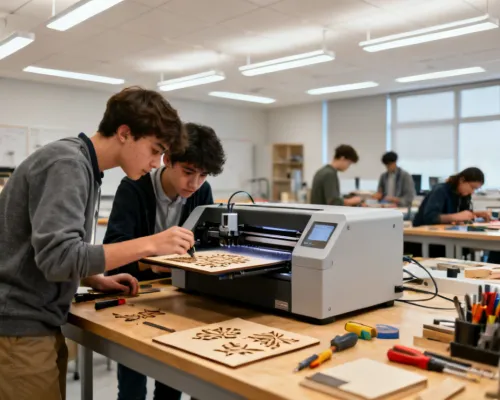
Schools, universities, and community makerspaces deploy LaserPecker machines as introduction-level laser tools. The app-based workflow removes the learning curve of traditional laser software. Students go from design to finished piece in a single class period.
The LP3's enclosed design meets classroom safety requirements without dedicated ventilation infrastructure. Multiple units can run simultaneously from standard wall outlets (under 60W per machine). Cost per machine is a fraction of a full-size CO2 laser, allowing programs to provide one machine per workstation instead of one shared unit for the entire lab.
Tell us what you make and what materials you work with. We will recommend the right LaserPecker model.
Get a Recommendation